
Start with the quoted number
What Is Wholesale Unit Cost?
Wholesale unit cost is the supplier's quoted product price per unit before other order-related expenses are considered. It is useful because it provides a simple starting point for comparing the same model at the same quantity. It is not, by itself, the complete cost of receiving inventory or preparing it for sale.
A quote should identify the exact product, quantity, package contents, and currency behind the unit price. A number without those details can create a false comparison. One quote may include a complete retail package while another excludes accessories, documentation, or handling that the reseller must later arrange.
Quoted unit cost is therefore one input in the purchasing decision. Freight, payment costs, order size, fulfillment location, damaged or missing units, warranty procedures, and the time required to reorder can all change the practical cost of the inventory.
Measure the inventory received
What Is Landed Cost?
Landed cost is the total direct cost required to get inventory into a condition and location where it can be sold. Depending on the order, it may include product cost, freight, insurance when applicable, customs or import-related costs when applicable, payment costs, handling, and other directly attributable order expenses.
Not every order has every cost. A domestic shipment may not involve import-related charges. A supplier may include freight in one quote and separate it in another. A payment method may create a fee in one transaction but not another. The purpose of a landed-cost worksheet is to identify which costs actually apply and compare quotes on the same basis.
Some operating expenses, such as advertising, platform fees, general overhead, and customer support, may sit outside a narrow landed-cost calculation. They still matter when the reseller evaluates final profitability, so the scope of each calculation should be labeled clearly.
Use a consistent framework
A Simple Landed Cost Formula
Total Landed Cost
This is an educational planning framework, not an accounting, tax, or legal rule. A business should use the cost categories and professional guidance that apply to its transactions and jurisdiction.
Illustrative example only
Example: Calculating Landed Cost Per Unit
Assume a reseller is comparing a hypothetical 50-unit order. The example below shows how direct costs can change the per-unit result even when the quoted unit price appears straightforward.
- Quantity
- 50 units
- Quoted unit cost
- $50
- Product cost
- $2,500
- Freight
- $200
- Payment fees
- $50
- Other direct costs
- $50
- Total landed cost
- $2,800
- Landed cost per unit
- $56
These numbers are for illustration only and do not represent COLABOX pricing or industry averages. Real costs depend on the supplier, product, order quantity, shipping destination, payment method, and other transaction details.
Compare equivalent order outcomes
Why the Lowest Unit Price May Not Be the Lowest-Cost Order
Quote A might show a lower unit price but require a larger minimum quantity, higher freight, and a longer replenishment cycle. Quote B might show a slightly higher unit price while offering lower freight, a more flexible quantity, and shorter replenishment. Neither quote is automatically better.
The reseller should calculate the expected total landed cost, divide by sellable units received, and then consider operational fit. A low-cost order that ties up too much cash or creates more inventory than demand supports may be less useful than a smaller order with a higher unit price. A flexible order can also become expensive if support, warranty, or fulfillment terms are unclear.
Compare total landed cost and operational fit, not unit price alone. Use the structure below to collect equivalent information before accepting a quote.
| Factor | Quote A | Quote B |
|---|---|---|
| Unit price | — | — |
| Quantity | — | — |
| Freight | — | — |
| Payment fees | — | — |
| Import costs | — | — |
| Estimated landed cost | — | — |
| Fulfillment location | — | — |
| Reorder time | — | — |
| Warranty | — | — |
| RMA support | — | — |
| Damage/loss handling | — | — |
| Sales channel rules | — | — |
Translate freight into a per-unit effect
How Freight Changes Wholesale Cost
Freight should be reviewed as both a total shipment cost and a cost per sellable unit. Shipping method, carton size, weight, order quantity, distance, delivery service, and domestic or international fulfillment can all affect the result. Ask whether the freight amount is confirmed, estimated, prepaid, or collected separately.
Freight per unit may decrease as order quantity increases, but that does not automatically justify buying more inventory than demand supports. The apparent shipping efficiency must be compared with the additional cash commitment, storage requirement, and risk of slower sell-through.
Use the reseller inventory planning guide to compare expected demand, reorder coverage, and safety stock before increasing an order only to reduce shipping per unit.
Confirm what the payment method adds
Do Payment and Transaction Fees Matter?
Payment-related costs can include card processing fees, wire fees, currency conversion, or charges from a payment provider. These costs do not apply to every supplier or every payment method. They should be confirmed before payment rather than assumed from the quoted product price.
A useful question is: Are there any payment-related costs not included in the quoted product price? If the buyer and supplier use different currencies, also confirm which exchange rate applies, when it is set, and whether conversion fees are shown separately.
Count units that can actually be sold
Damaged or Lost Inventory Can Change Your Real Cost
If 100 units are ordered but only 98 arrive in sellable condition, dividing the order cost by 100 understates the immediate cost per sellable unit. The buyer should document the shortage or damage, follow the applicable claims procedure, and update the calculation based on the units currently available for sale.
The final cost can change again if the issue is resolved through replacement, credit, repair, or another approved remedy. Keep the original order calculation and the final resolution together so future quote comparisons reflect the actual outcome rather than an incomplete first estimate.
COLABOX wholesale orders include support for shipping loss or damage issues according to applicable order handling procedures. The process and available resolution depend on the order and evidence provided; this is not a promise of instant compensation, automatic cash refund, or same-day replacement.
Include after-sales work in the decision
Returns and Warranty Are Part of Wholesale Economics
A lower-priced product can become more expensive to sell if returns and support are difficult to manage. The reseller may spend time answering setup questions, collecting order information, testing a reported issue, arranging return shipping, coordinating an RMA, or communicating replacement timing.
Before purchasing, ask what warranty applies, which party communicates with the end customer, what evidence is required, how returned units are evaluated, and who coordinates replacement logistics. Clear procedures do not eliminate returns, but they can reduce uncertainty and prevent unsupported promises.
Do not rely on an assumed industry return rate or a supplier's general reputation. Use the written warranty and RMA terms for the specific order, then track the business's own results over time.
Account for capital that remains on the shelf
Inventory Holding Cost: The Cost New Resellers Often Miss
Inventory uses cash, storage, shelf space, working capital, and management attention while it waits to sell. A larger order can also limit the ability to test another product, respond to a new customer need, or fund customer acquisition. These effects may not appear on the supplier quote, but they influence the quality of the purchasing decision.
Unsold inventory still carries a business cost even when the original unit price looked attractive. New resellers do not need a complex accounting model to recognize this. Track how many units remain, how long they have been held, whether they require discounting, and what other uses of cash were delayed.
The inventory planning framework explains how to estimate weekly demand, reorder coverage, safety stock, and the point at which a carton order becomes more practical.
Evaluate the second order before placing the first
Reorder Efficiency Can Matter as Much as First-Order Price
Reorder lead time, supplier communication, inventory visibility, SKU consistency, tracking, and replenishment flexibility can affect how much safety stock a reseller needs. A supplier with predictable reordering may help a business operate with a smaller buffer. A longer or less certain cycle may require more planning.
Faster replenishment does not automatically produce more profit, and a slower order is not automatically uneconomic. The relevant question is whether the supply process matches the seller's demand pattern, working capital, and customer expectations.
Ask whether the same SKU and package will remain available, how current inventory is confirmed, when tracking is provided, and what information is needed for a repeat order. Record the actual cycle after each purchase instead of continuing to rely on the first estimate.
Compare logistics without assuming one source is best
US Fulfillment vs Overseas Fulfillment
Overseas fulfillment may provide lower factory pricing in some situations, but it can also involve longer transit, customs or import complexity, larger planning buffers, and more cash committed while inventory is moving. The exact result depends on product, quantity, origin, destination, carrier, and order terms.
US-based fulfillment may provide shorter replenishment cycles, domestic tracking, simpler reorder planning, and lower logistical complexity for US orders. It is not always cheaper, and domestic availability can still change. Compare the complete quote and the operating needs of the business.
Available COLABOX wholesale inventory can be fulfilled from California for US domestic orders. Current product availability, shipment preparation, freight, and timing are confirmed before each order.
Consider savings and exposure together
How Order Size Affects Landed Cost
A larger order may reduce the quoted unit price and freight per unit. It also increases cash commitment, inventory holding, overstock risk, and concentration in one product. Lower cost per unit only helps when the inventory can actually sell.
Smaller orders may have a higher unit cost but reduce initial cash commitment and test-market risk. Larger minimum quantities may improve unit economics while creating more exposure. Neither a low MOQ nor a high MOQ is automatically better.
MOQ and Landed Cost Should Be Evaluated Together
Compare the total order amount, sellable unit count, expected sales pace, reorder timing, and cash remaining after purchase. An MOQ that fits a proven sales channel may be efficient. The same quantity may be excessive for a new seller without demand evidence.
Review reseller inventory planning before increasing order size for unit savings alone.
Calculate margin after the inventory cost is understood
Landed Cost Comes Before Margin Planning
These formulas provide a basic product-level view. Actual business profitability may also be affected by advertising, ecommerce platform fees, payment processing, returns, customer support, and overhead. Some of these expenses may be tracked outside landed cost but still reduce the final result.
There is no single margin percentage that is correct for every reseller. The business must consider its sales channel, service responsibilities, return exposure, operating expenses, competitive position, and cash requirements. Do not set a selling price from the supplier's unit price alone.
Current wholesale order context
How COLABOX Wholesale Pricing Works
COLABOX uses quote-based wholesale pricing. Quotes may consider the product, quantity, product mix, shipping destination, available inventory, and purchasing volume. Pricing and shipping terms are confirmed before each order. Internal price tiers are not published on this page.
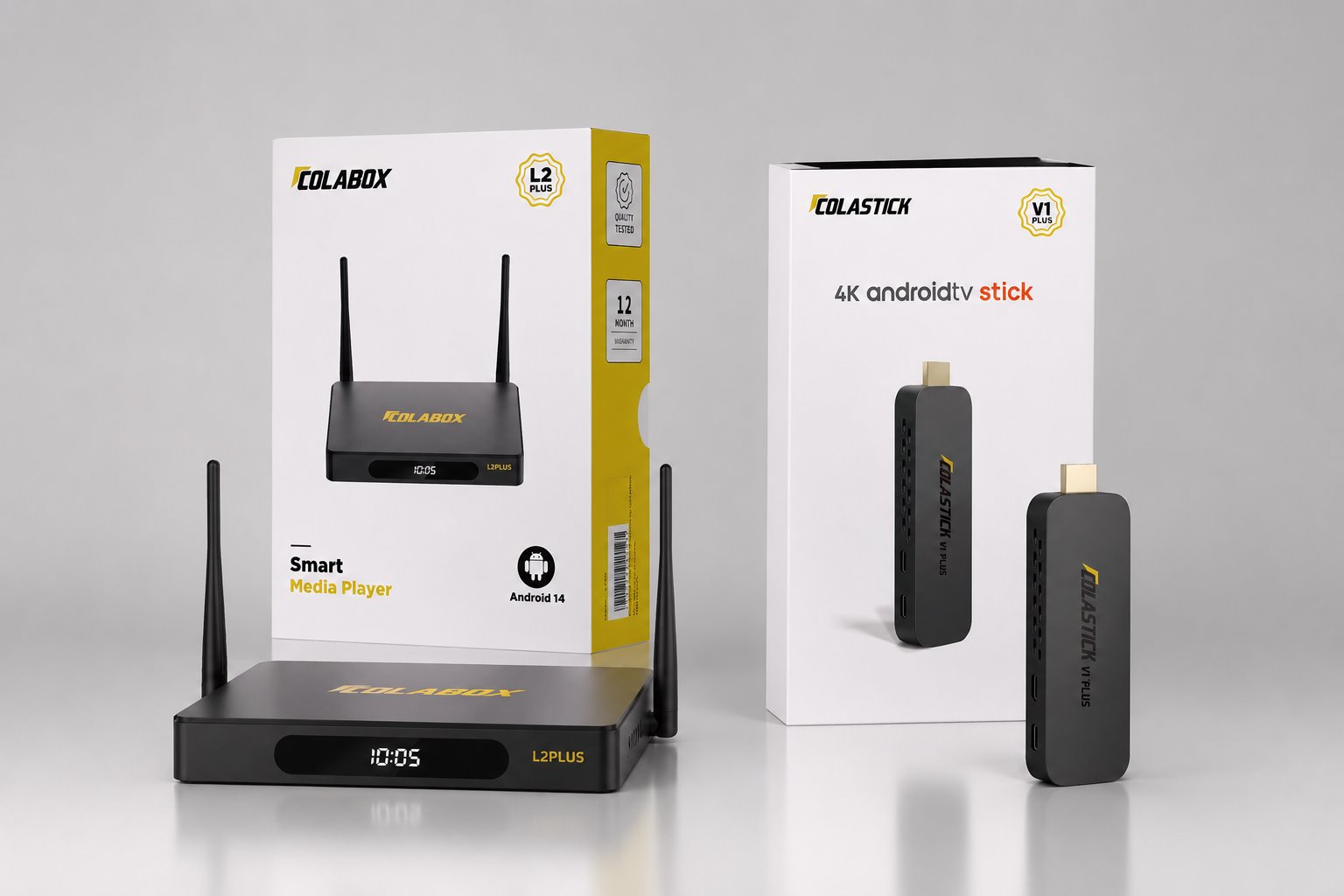
COLABOX L2 Plus
5 unitsIntroductory order
20 unitsStandard carton
COLASTICK V1 Plus
10 unitsIntroductory order
40 unitsStandard carton
Smaller introductory orders can help new resellers collect real demand data before committing to larger inventory. Review the COLABOX L2 Plus and COLASTICK V1 Plus product pages for confirmed specifications and current ordering context.
If product format and customer fit are still being evaluated, use the wholesale streaming device buying guide. Businesses seeking ongoing dealer support can also review the COLABOX Dealer Program.
Resolve the unknowns before payment
Questions to Ask Before Accepting a Wholesale Quote
Use the checklist to confirm what the quote includes and how the order will be handled. Written answers make it easier to compare suppliers and update the landed-cost calculation when a term changes.
- Is freight included?
- Are payment fees included?
- Where does the order ship from?
- What is the minimum order quantity?
- What is the standard carton quantity?
- How are lost shipments handled?
- How are damaged units handled?
- What warranty applies?
- How does the RMA process work?
- Are there sales-channel restrictions?
- How does reordering work?
- Is quantity-based pricing available?
- How long is the quote valid?
- Is inventory currently available?
Common wholesale cost questions
Wholesale Pricing & Landed Cost FAQ
What is landed cost?
Landed cost is the total direct cost required to get inventory into a condition and location where it can be sold. Depending on the order, it may include product cost, freight, insurance, import-related charges, payment costs, handling, and other directly attributable order costs.
Is landed cost the same as wholesale unit price?
No. Wholesale unit price is the supplier's quoted product price per unit. Landed cost also considers the direct costs required to receive sellable inventory.
How do I calculate landed cost per unit?
Add product cost, freight, payment costs, import-related costs when applicable, and other direct order costs. Divide that total by the number of sellable units received, not automatically by the number ordered.
Should I always choose the supplier with the lowest unit price?
No. Compare total landed cost, order quantity, fulfillment timing, support, warranty handling, and operational fit. A lower quoted unit price can still produce a higher-cost or less practical order.
Does shipping count toward landed cost?
Shipping can be included when the cost is directly attributable to receiving that inventory. The exact accounting treatment depends on the business and jurisdiction, so this guide should be used as a planning framework rather than a formal accounting rule.
Do returns affect reseller profitability?
Yes. Returns may be tracked separately from a narrow landed-cost calculation, but they can still affect support time, replacement logistics, payment costs, and the profit ultimately earned from the inventory.
Does ordering more always reduce my cost?
No. Unit price or freight per unit may fall, but cash commitment, holding cost, and overstock exposure can rise. A larger order helps only when the additional inventory can be sold and supported efficiently.
Does COLABOX publish wholesale pricing online?
No. COLABOX uses quote-based wholesale pricing. Product, quantity, product mix, shipping destination, available inventory, and purchasing volume may affect the written quote.
What are the COLABOX introductory quantities?
Current introductory quantities are 5 units for the COLABOX L2 Plus and 10 units for the COLASTICK V1 Plus. Standard cartons contain 20 L2 Plus units or 40 COLASTICK V1 Plus units.
Does COLABOX offer larger-volume pricing?
Larger orders may receive quantity-based quotes depending on purchasing volume, product mix, available inventory, shipping destination, and other order factors. Pricing and terms are confirmed before each order.
This guide is provided for general business planning purposes and is not tax, accounting, or legal advice.